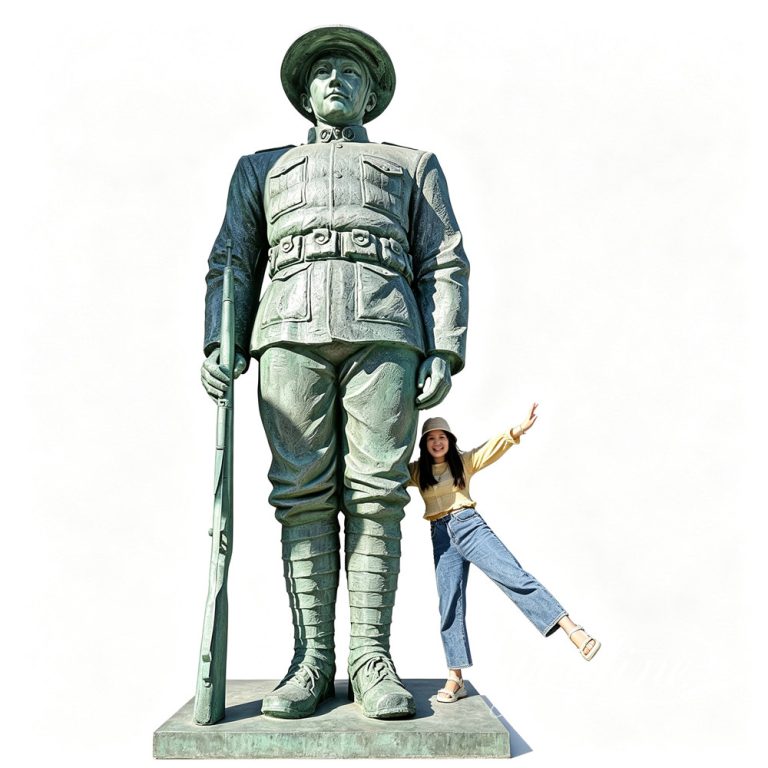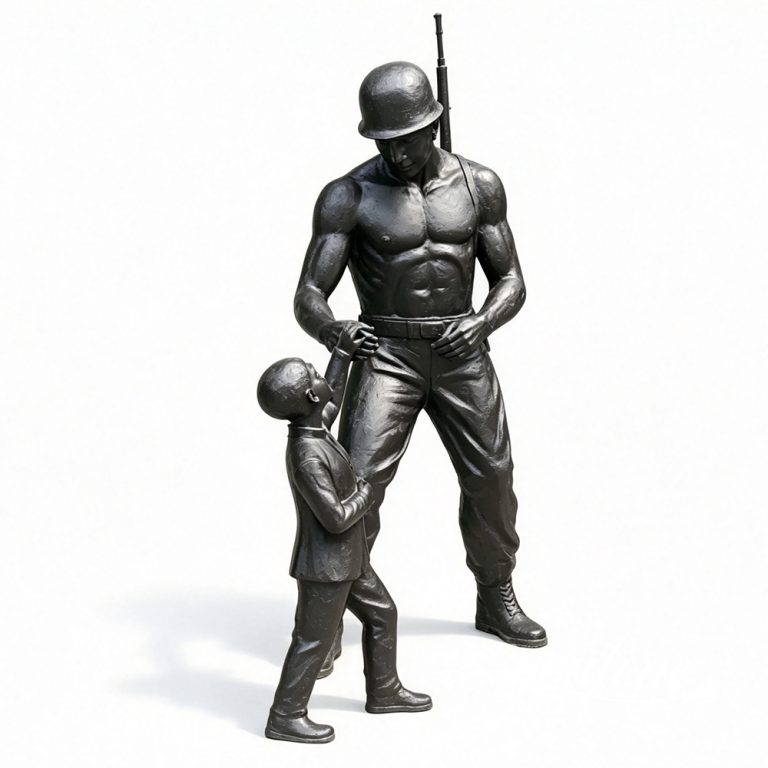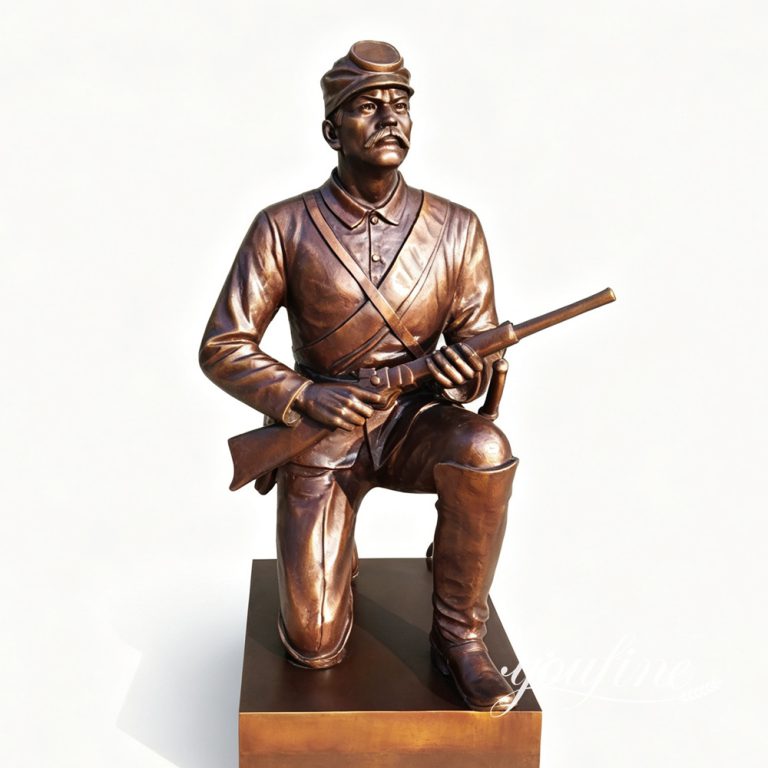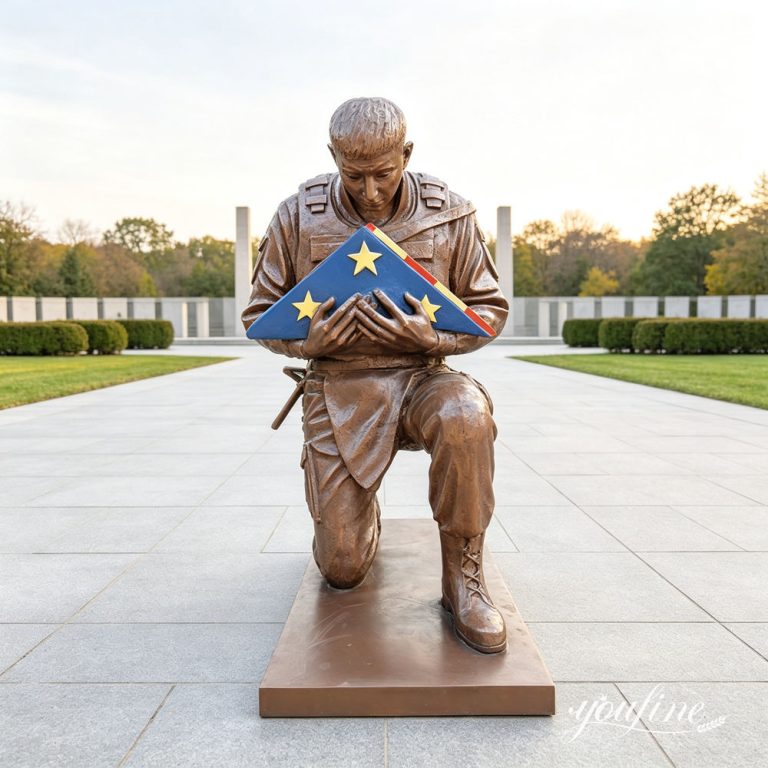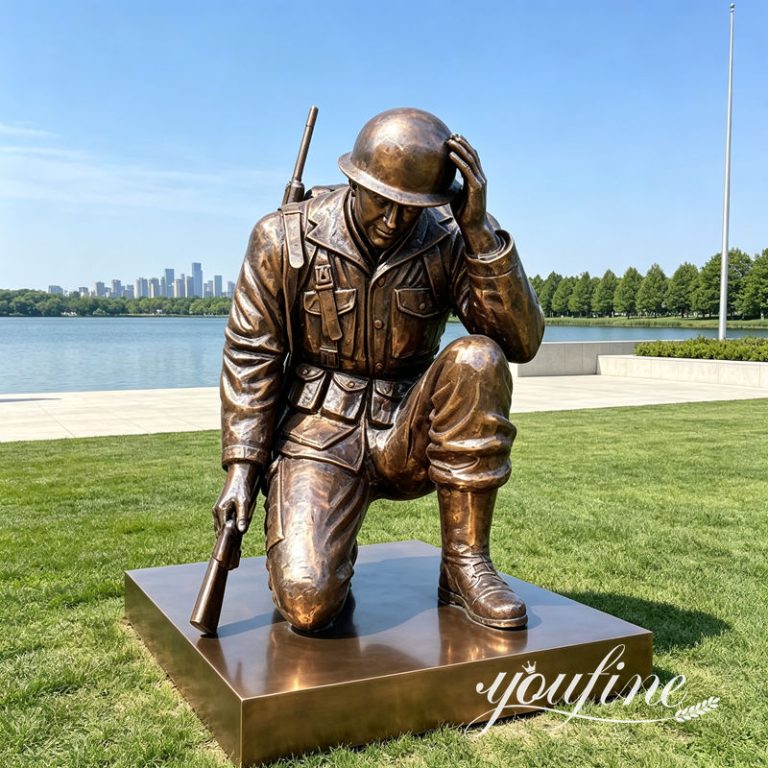


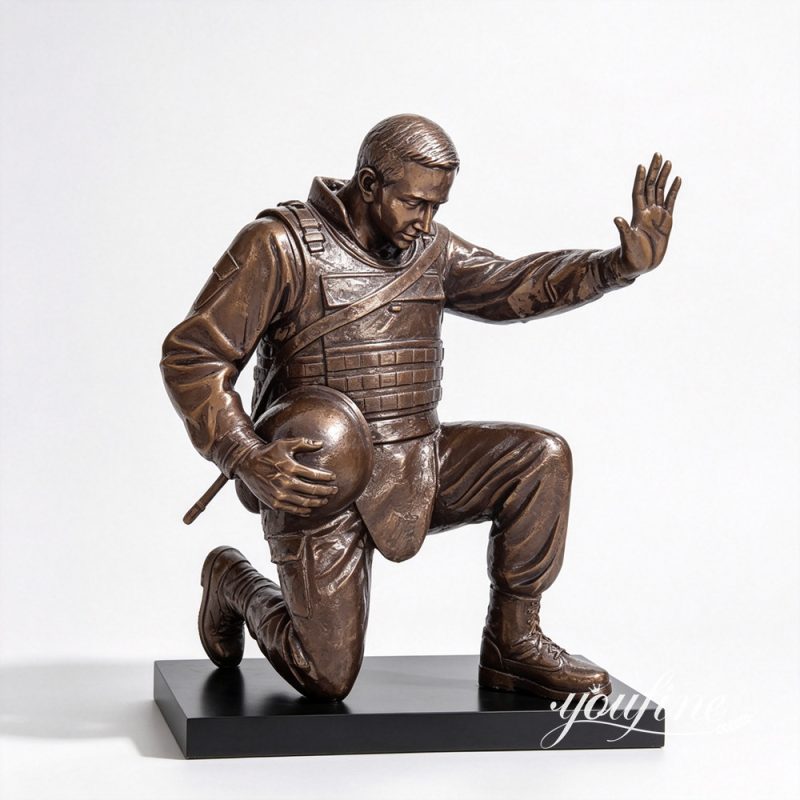
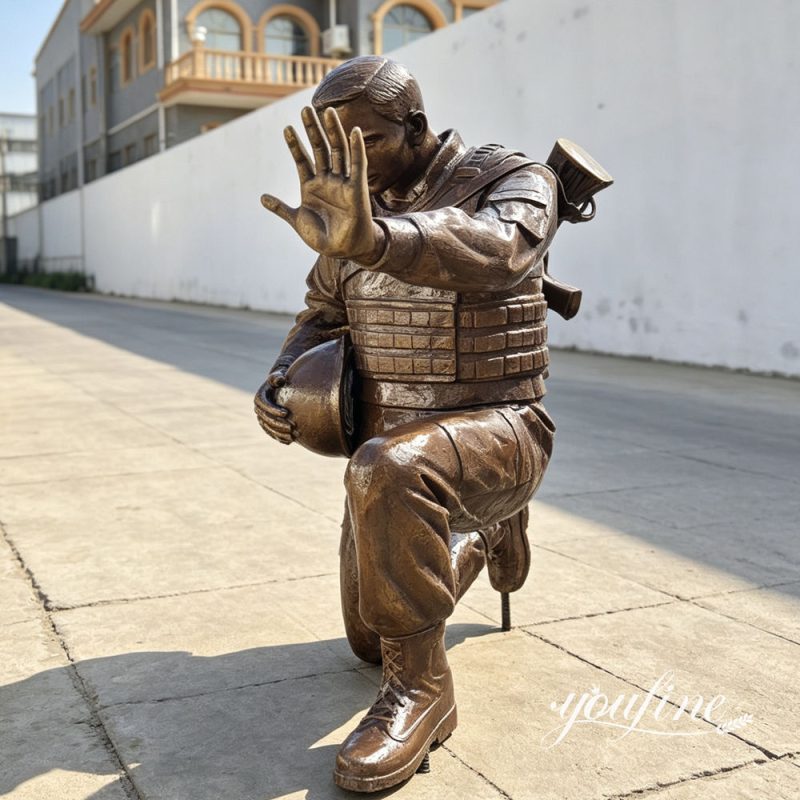
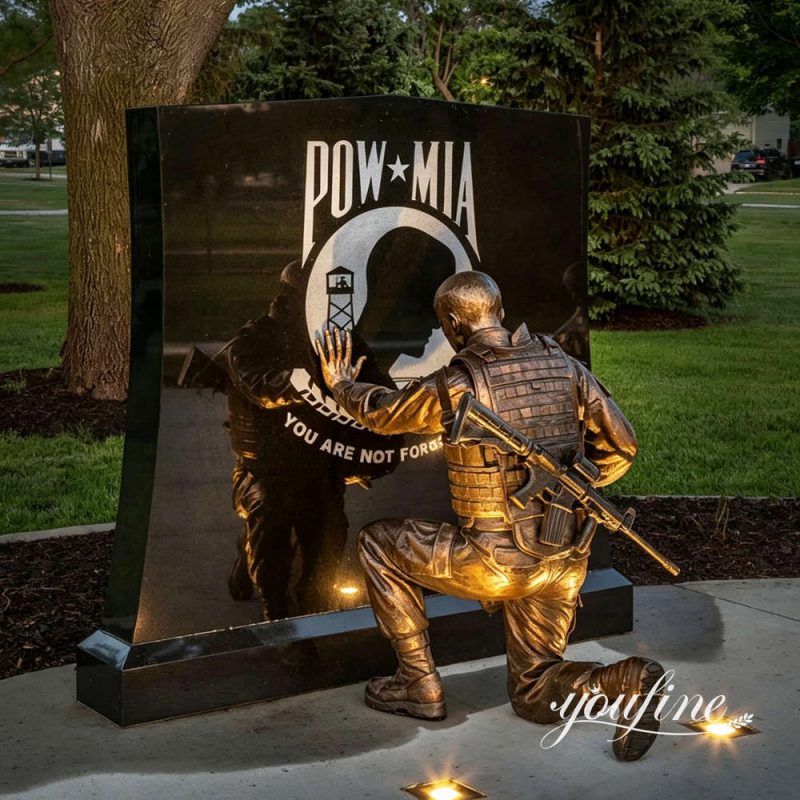


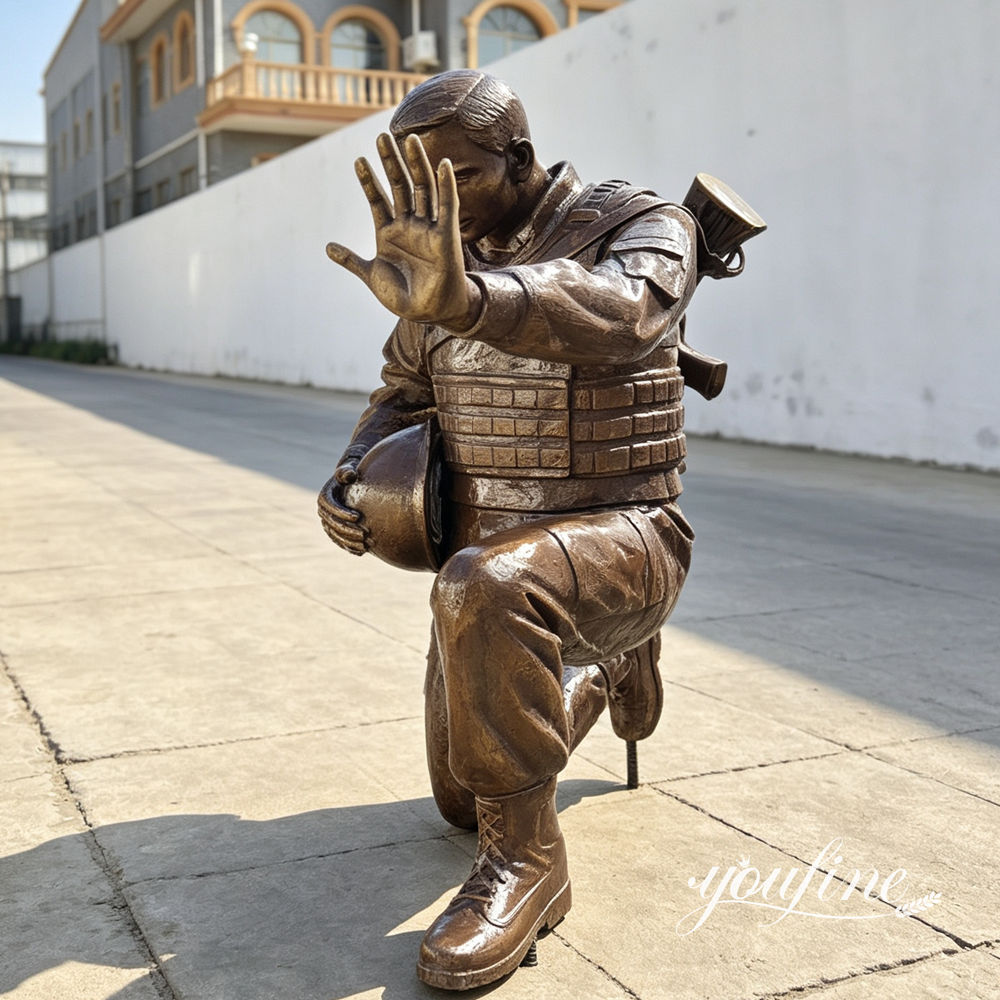
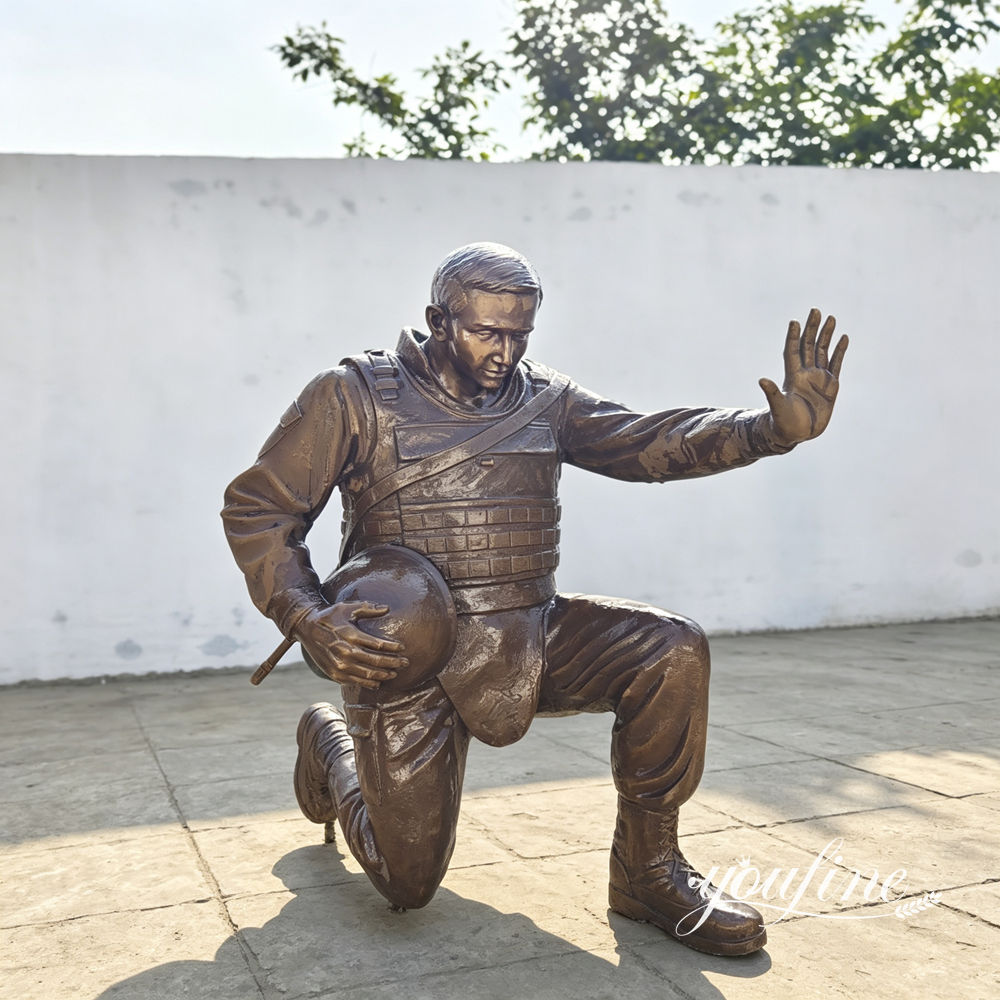
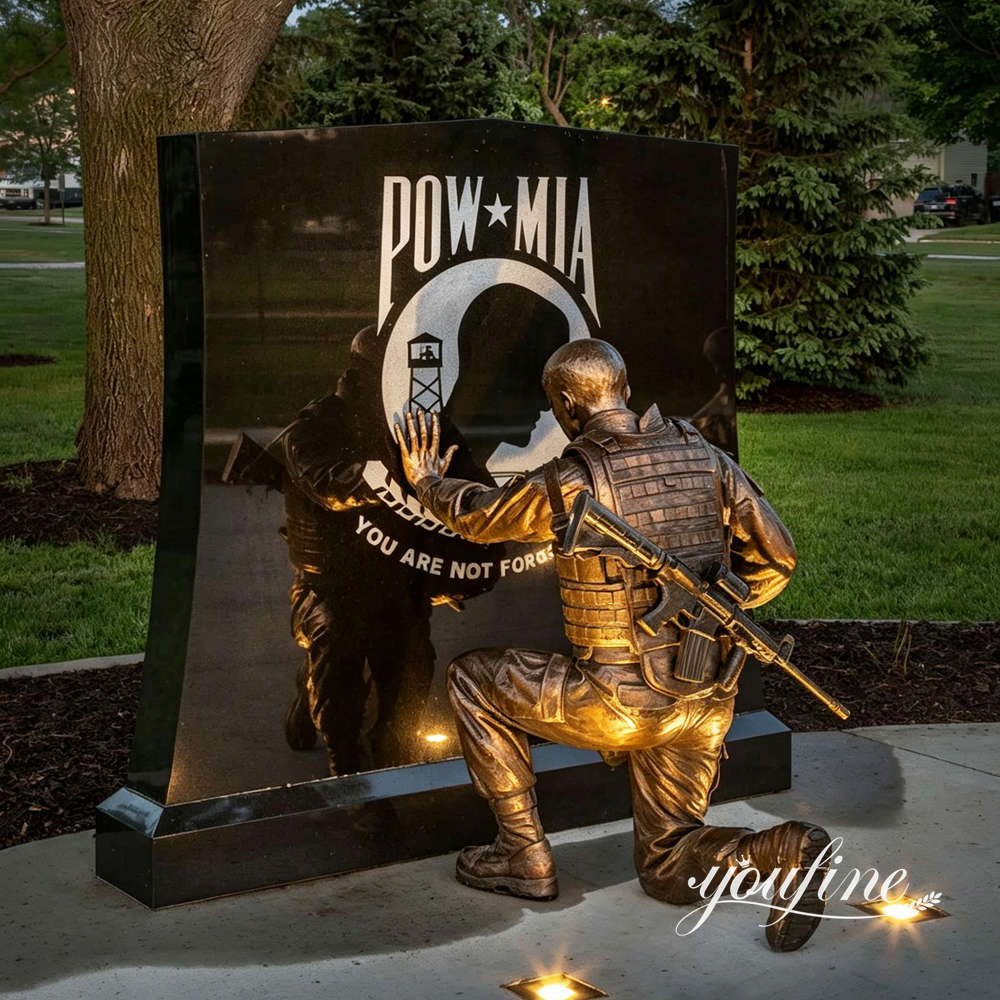
Ce bronze kneeling soldier memorial wall statue portrays a modern service member in a quiet act of remembrance. He rests on one knee, holds his helmet close to his body and raises an open hand toward a memorial wall. A rifle is secured across his back. The design avoids an active combat scene and instead focuses on loss, reflection and respect for those who did not return.
A Memorial Gesture with a Clear Meaning
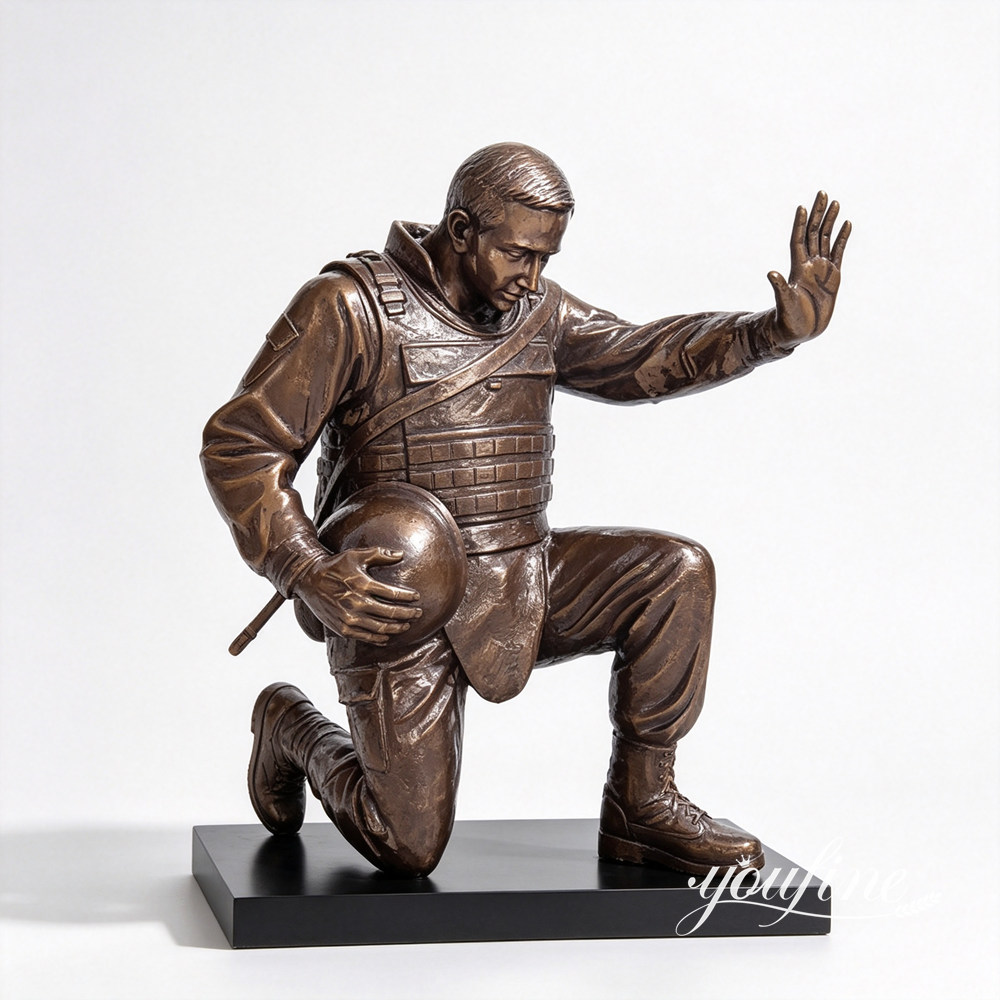
The open palm is the emotional center of the composition. Positioned beside a name wall or polished stone panel, it suggests a direct connection between the soldier and the people being remembered. The helmet held against his side adds a second, quieter gesture: he has paused, removed a piece of his equipment and given the moment his full attention.
This approach suits veterans parks, military bases, remembrance gardens, cemeteries, civic plazas and memorials commissioned by service organizations. It can also be adapted for a POW/MIA-themed setting when the commissioning group supplies approved graphics, inscriptions and layout requirements.
Designed Around the Wall, Not Added Afterwards
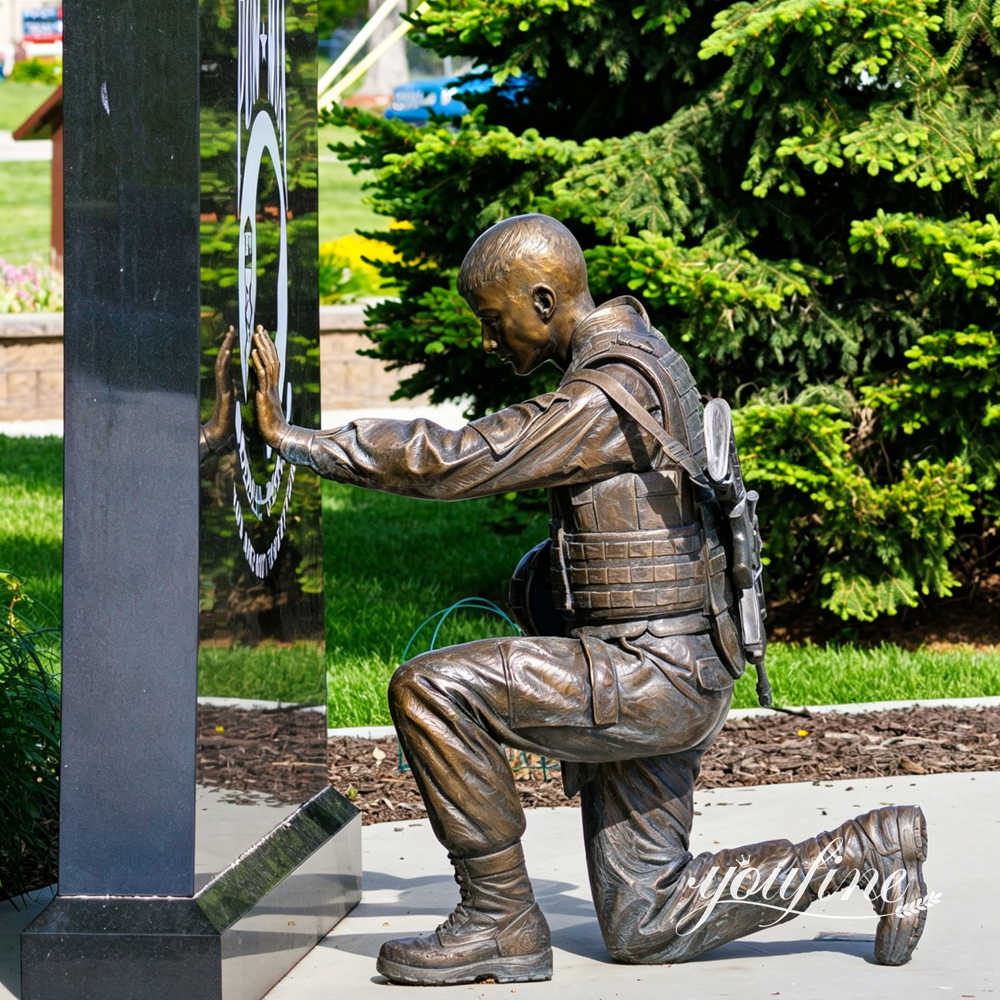
A wall-facing figure has to be planned with the site. The palm height, distance from the panel, body angle and direction of view all affect whether the composition feels connected. YouFine can work from site photographs, wall dimensions and a simple plan to adjust these relationships before casting.
The bronze figure is anchored to its own foundation; the extended arm should not place structural load on the memorial wall. A controlled gap or carefully aligned contact point can protect the wall surface while preserving the intended visual connection. For polished stone, the reflection, nearby lighting and the visitor’s approach should also be considered during layout review.
Modern Military Details That Can Be Verified
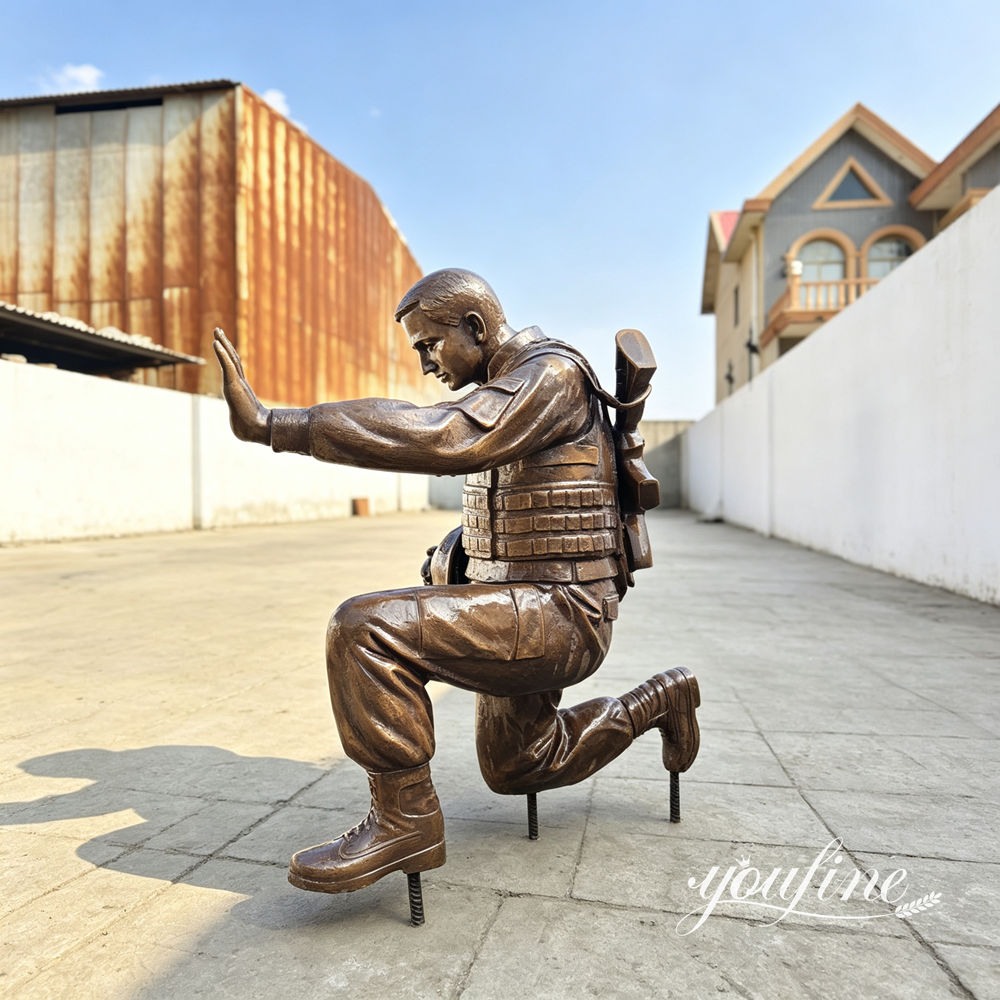
The figure wears a plate-style tactical vest over a field uniform, combat boots and a shoulder strap supporting the rifle. Separate layers in the vest, buckles, webbing, trouser folds and boot construction give the sculpture a contemporary military identity. The lowered face remains visible rather than hidden behind the raised hand, allowing the expression to carry the restrained tone of the memorial.
For a commissioned version, uniform and equipment should match the intended service branch and period. Clients may provide reference photographs for unit patches, name tapes, vest configuration, rank details, weapon type or portrait features. This avoids a generic mix of equipment that looks convincing from a distance but is incorrect to veterans and service families viewing it closely.
Clay Review Before Bronze Casting
The production record shows how the pose developed from a full clay model to the finished metal sculpture. At the clay stage, the project team can review the face, open hand, helmet grip, equipment and balance from several angles. Requested corrections are easier to make here than after casting.
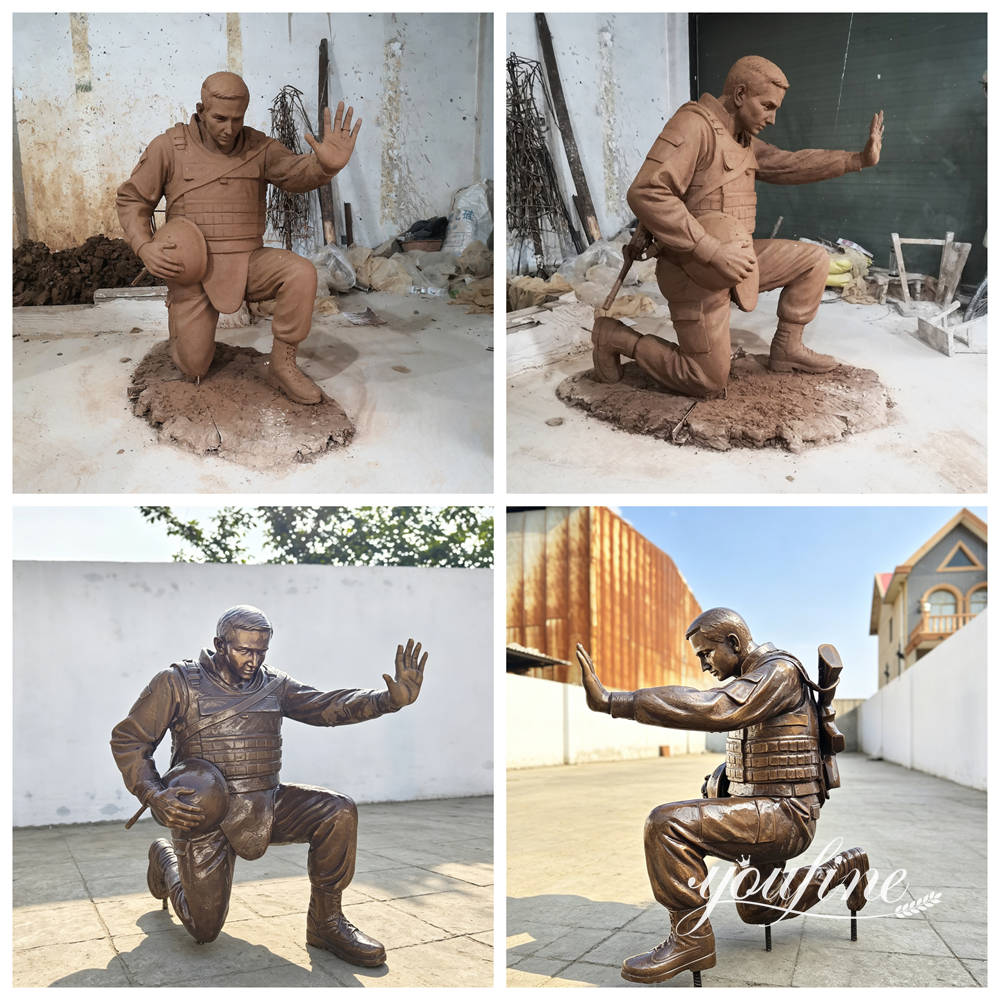
After model approval, the figure is cast in bronze using the lost-wax process. The sections are joined, chased and patinated, with attachment points prepared for the selected foundation. Brown, dark bronze and other project-specific finishes are available. Final dimensions remain customizable because the figure must be proportioned to the wall and viewing distance rather than selected in isolation.
Planning Information We Need
- Preferred sculpture height and available footprint
- Wall height, width, thickness and finish
- Desired distance between the palm and wall surface
- Site photographs and the main visitor approach
- Uniform, insignia, equipment and portrait references
- Required inscriptions or approved memorial graphics
- Foundation information and local installation conditions
Other Kneeling Soldier Memorial Designs
Projects that do not include a memorial wall may prefer the life-size bronze kneeling soldier statue BOKK-43, which is designed as a self-contained tribute. For a historically specific Second World War subject, see the Soviet soldier mourning statue BOKK-878. These pages represent different memorial intentions rather than interchangeable versions of the same figure.
To prepare a proposal for BOKK-47, send the wall dimensions, site images, preferred size, and military references. YouFine can then coordinate the figure, base and hand position before the clay model is approved for casting.